

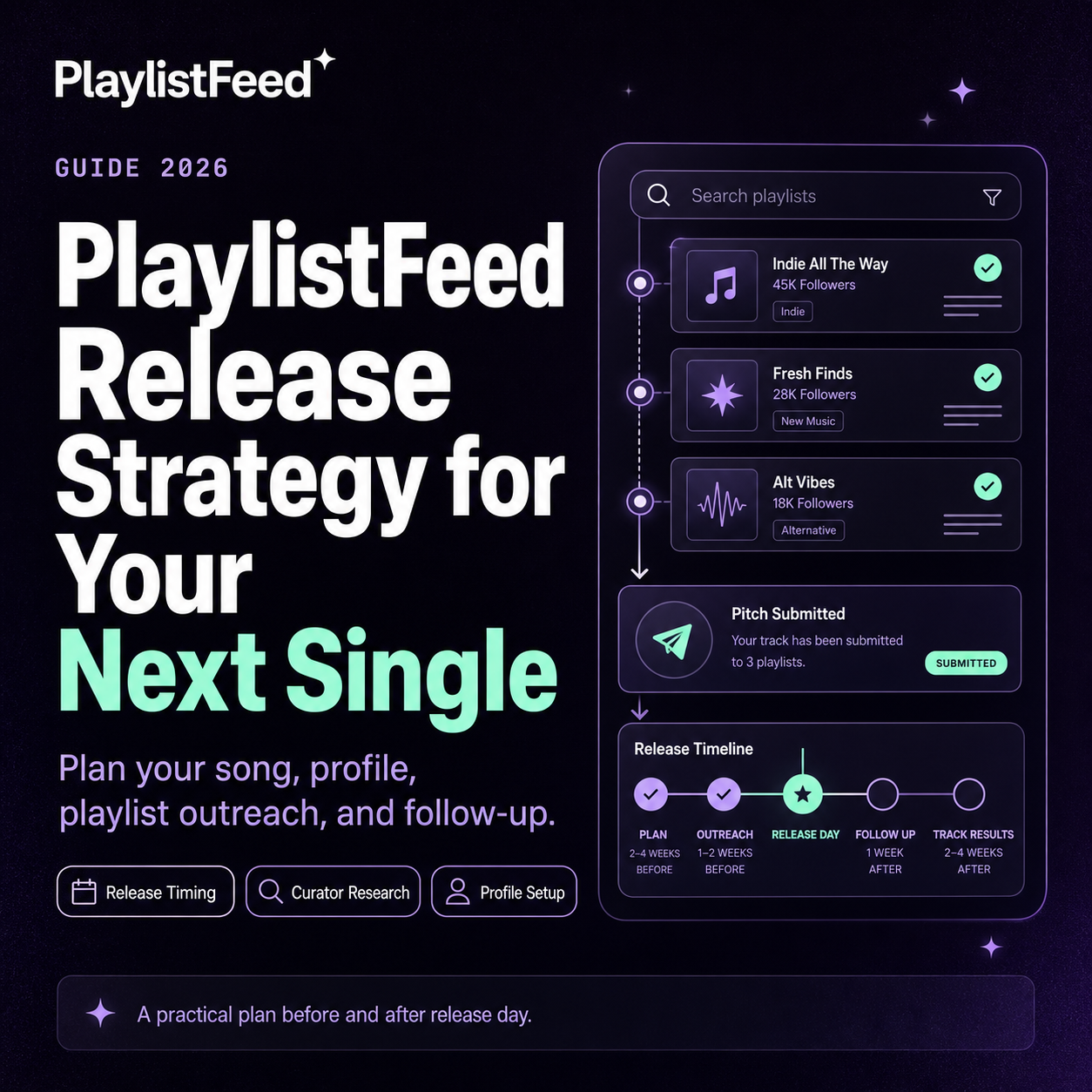
A PlaylistFeed release plan connects your song, artist profile, playlist outreach, and follow-up work around one release date. Start early enough to prepare the music and pitch, then keep the campaign moving after the first day instead of treating release day as the finish line.
A release plan cannot promise that a curator will add the song or that Spotify will recommend it more widely. It gives each part of the campaign a place, so your music, artwork, profile, links, and outreach all support the same release.
Most release checklists treat playlist pitching as one task. The better approach is to prepare the song before you pitch it, make the profile match the campaign, and keep your post-release outreach connected to the same release.
The strongest release plan gives every listener path a next step. Someone who finds the song through a playlist should land on a current artist profile. Someone who opens your pitch should understand the release without searching for missing details.
A Release Plan Starts Before You Contact Curators
Start the playlist part of your release plan before you send the first pitch. Curators need a song, a release date, and enough context to decide whether the track belongs on their playlist.
Spotify recommends pitching unreleased music to its editorial team through Spotify for Artists at least seven days before release day. Spotify also says artists can pitch one unreleased song at a time, which means a project with several upcoming songs needs a clear priority track. Spotify for Artists playlisting guidance explains the editorial pitch process and how an unreleased song can be considered for Release Radar.
Independent curator outreach follows a separate route. A curator may consider a release before or after it becomes available, depending on how often the playlist is updated. The preparation still begins with the same basics.
Set the release date first. Then make sure the final audio, artwork, metadata, smart link, and one-sentence description all refer to the same version of the song.
A pitch becomes easier to read when it does not have to explain a delayed date, an unfinished visual, or which version of the track is actually coming out. For a tighter calendar, use this seven-day playlist pitching plan to put the list work, message, and editorial submission in order.playlistfeed
The Song Needs A Clear Pitch Before It Needs More Outreach
A curator needs enough information to decide whether the song suits their audience. They do not need a full biography, a long backstory, or every accomplishment attached to the project.
Write the pitch in layers.
1. Name The Track And Release Date
Lead with the song title, artist name, and planned release date. This keeps the opening practical and helps a curator place the music on their own schedule.
2. Describe The Sound In Familiar Terms
Use genre, mood, instrumentation, tempo feel, and reference points that a playlist listener would recognize. Do not create a genre label solely for the campaign.
3. Explain Why The Song Fits That Playlist
The useful part of a curator pitch is the connection between the track and the playlist’s existing taste. Name the mood, scene, subgenre, or listening context you heard in that playlist.
4. Add One Real Campaign Detail
A real detail can be the release format, a show, a video, or a current reason the song exists. Keep it factual. Do not treat a hoped-for playlist add as part of the story.
Your pitch should still make sense if the curator reads only the first few lines. The message is an introduction to the song, not a press release. If the first sentence keeps sounding generic, this playlist pitch opening-line guide gives a useful test: name a real detail from the playlist and explain the fit instead of sending the same praise to everyone.playlistfeed
Your Spotify Profile Should Match The Release You Pitch
A curator may open your Spotify profile before deciding whether to listen or add the song. A listener may visit it after hearing the release elsewhere. Both should find a page that makes the release feel current.
Spotify describes the artist profile as your homepage on the service. Spotify for Artists lets you update artist images, bio, social links, merch, concerts, and Artist Pick. Artist Pick can feature a song, album, playlist, concert, merch item, or another supported destination at the top of the profile.
Before outreach begins, check these areas:
- Artist Pick: Feature the new release, a Countdown Page, a relevant show, or an artist playlist that gives profile visitors one next action.
- Bio: Make sure the opening lines still describe the project listeners are about to hear.
- Artist images: Use photos that match the release campaign and are still current.
- Links and live dates: Confirm that social links, concerts, and merch do not point toward an older campaign.
Do not rebuild your entire profile for every release. Update the pieces that help a first-time listener understand what is happening now. Curators often assess more than the recording itself, and what playlist curators look for beyond the song explains why the profile, the listening link, and your claimed genre should tell the same story.playlistfeed
Curator Research Should Happen Before Release Week
Release week is a poor time to begin from zero. You will be writing posts, answering messages, watching early data, and handling the practical work around the release.
Research curators while the campaign is still calm. Build a short group of playlists that fit the song’s genre, mood, and listener context. A smaller relevant set is more useful than a larger group assembled only around follower counts.
Look at what each playlist added recently. Read the description. Listen to a few transitions. Notice whether the playlist is built around a particular mood, scene, activity, or sound.
That work gives you a real reason for the pitch. Before you add a playlist to the send list, use the playlist-quality checks before you pitch to assess activity, track fit, and signs that the playlist is being managed, rather than relying on its follower total.playlistfeed
PlaylistFeed can support this stage of the campaign. You can search verified curators by genre, compare the playlists against the release, and keep pitch work tied to one campaign instead of collecting names without a sending decision.
What Should You Send Before Release Day?
Send the pitch once the song details are stable and the release date is real. A changed title, new master, delayed date, or unfinished artwork creates confusion for everyone who receives the campaign.
For Spotify editorial pitching, use the unreleased track in Spotify for Artists and give the submission enough lead time for Spotify’s stated process. Spotify says pitching at least seven days before release day makes the song eligible for consideration in followers’ Release Radar.
For independent curators, match the timing to the playlist. Some curators plan ahead. Others update more often and may consider a song after release day. Your message should say whether the track is unreleased or available now, then give the curator a working listening link.
Avoid sending the same broad pitch everywhere. Your core facts can remain consistent, but the first lines should change based on the playlist’s genre and context. PlaylistFeed’s AI pitch writer guide outlines the useful information a pitch needs: the curator’s playlist, the reason the song fits it, and a working streaming link.playlistfeed
Release Day Is For Making The Song Easy To Find
Release day is the moment to remove friction for people who already want to hear the song.
Your smart link, Spotify profile, social posts, email, and artist channels should point toward the same release. If a listener reaches the profile first, Artist Pick should make the track easy to identify. If they reach the song first, the profile should explain what else is happening around it.
Spotify for Artists offers Source of Streams reporting on Audience, Song, and Release overview pages. The report shows where listeners played music and groups sources into active and programmed paths, including artist profile, catalog, listeners’ libraries, playlists, radio, autoplay, editorial playlists, and personalized playlists. Spotify’s Source of Streams documentation explains where to find the report and what it covers.
Do not try to settle the campaign’s outcome in the first few hours. Use release day to confirm that links work, the profile is current, and the campaign message is consistent. For a more detailed release-week reading order, Spotify release week for indie artists maps which reports are useful across the first week.playlistfeed
Post Release Outreach Needs A Different Message
After release day, you are no longer introducing an upcoming song. You are showing a curator what is available now and why it may fit their playlist.
That changes the pitch. The release date becomes proof that the song is live. Your streaming link is ready. A curator can hear the final version immediately.
Keep the message focused on fit. Do not turn early listener activity into a claim that the song will work for the curator’s audience. A few plays, saves, or social comments can be useful context, but they do not decide the curator’s editorial choice.
If the song has been available for a while, give yourself a current reason to continue outreach. A new video, live performance, remix, seasonal context, updated artist playlist, or a new audience angle can make the conversation timely again.
Source Of Streams Helps You Separate Discovery From Profile Visits
Playlist outreach and profile optimization do different jobs. A playlist can introduce the song to a listener, while the artist profile helps that listener decide what to hear, follow, save, attend, or buy next.
Spotify’s Source of Streams report helps you see those paths separately. Spotify identifies artist profile and catalog streams as active sources, while other listeners’ playlists, editorial playlists, personalized playlists, radio, and autoplay appear as programmed sources. Spotify’s Source of Streams documentation details those categories.
That distinction matters when you review a release plan. A rise in programmed playlist listening may show where first listens are happening. Profile and catalog activity can show whether listeners are exploring beyond one track.
Do not treat one report as a final verdict on the campaign. Source categories describe where the play began. They do not explain every reason a person listened, saved a track, or returned later.
A Release Plan Needs A Limit On How Much You Send
More pitches are not automatically better. If you cannot explain why the song fits a playlist, the message is probably not ready for that curator.
Set a sensible sending limit based on the time you have and the number of relevant playlists you found. Leave enough room to personalize the opening, check the release details, and record what you sent.
A campaign can lose focus when outreach becomes the only work happening. The release still needs a working profile, clear links, direct fan communication, and content that gives people a reason to listen.
Use a simple record with the curator name, playlist, date sent, song, contact method, and response. That prevents duplicate outreach and helps you see which playlist types fit your catalog over time. A free playlist pitch tracker template can help you keep the release, curator, send date, and reply status together, but confirm the exact post URL in the CMS before publishing because the visible post index did not expose the individual tracker permalink.playlistfeed
Common Mistakes
Starting Curator Research After The Song Is Out
You can still pitch a live release, but starting earlier gives you more time to find relevant playlists and write messages that are specific to them.
Sending A Pitch Before The Song Details Are Final
A changed release date or unfinished link creates avoidable confusion. Confirm the core release information before outreach begins.
Treating Follower Count As The Only Playlist Signal
A large follower total does not show whether a playlist is active, whether its listeners fit your song, or whether the curator is currently adding music.
Updating Social Posts But Leaving The Profile Behind
A release can feel fragmented when social posts promote a new song while Artist Pick, images, and links still point to a previous project.
Expecting The Same Pitch To Work Before And After Release Day
The song has changed status. Update the message so a curator can immediately understand whether the release is upcoming or available.
Promising Results You Do Not Control
Curators decide whether to add music. Spotify controls its recommendation systems. A release plan can make your outreach and profile clearer, but it cannot guarantee the result.
Conclusion
A useful PlaylistFeed release plan starts before release day and continues after it. Prepare the song details, make the Spotify profile match the campaign, research curators while you have time to do it well, and update the message once the track is live.
The plan is strongest when every part supports the same release. Playlist discovery can help a new listener find the song. Artist Pick and the rest of your profile can help that person decide where to go next. Source of Streams can help you understand which routes are bringing people into the music.
Your release calendar can organize the song, the assets, and the announcements. It cannot introduce the track to listeners who have not encountered it yet. Those listeners are already hearing music through playlists, and curators decide what they add. PlaylistFeed helps you search verified curators in your genre, write a pitch, send it, and track the outreach around the release. Searching is free, and every playlist is verified before it is listed. Find playlists to pitch.


